Author: admin

  • Mountain Gorillas Could be Extinct If Not Conserved

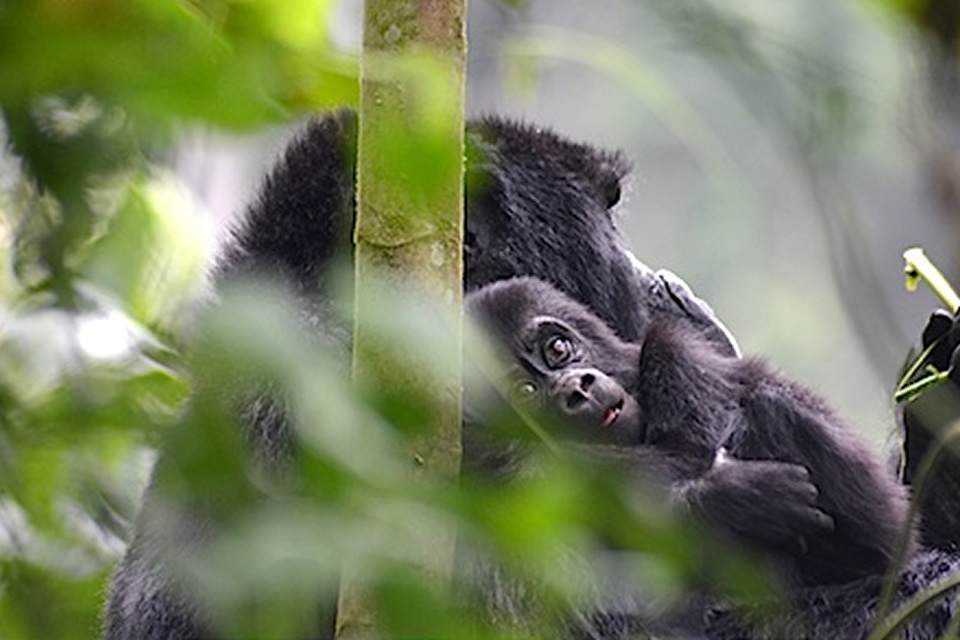
    Of the few Mountain Gorilla’s that remain on Earth estimated less than a Thousand, almost half of the population live in Uganda’s Bwindi impenetrable National Park and Mgahinga National Parks while the rest can be found in the Volcanoes National Park in Rwanda and some in Democratic Republic of Congo (DRC). The Shy and Gentle Mountain Gorilla’s are the Earth’s largest living Primate and the Regions most famous tourism attraction. Bwindi Impenetrable National Park is said to host about 300 Mountain Gorilla’s, almost half the entire Mountain Gorilla population living in the wild today.

    Several factors often threaten the existence of the Mountain Gorilla’s thus their dwindling population such as disease, poaching, human population encroachment of their habitat the rain forests among others. Gorillas are open to same diseases which effect humans since they are closely related to humans with similar anatomic and physiological features. Gorillas live in small groups any exposure to any kind of illness affects the entire group which may fail to recover from the entire fall that’s why human contacts are restricted. All Gorilla trackers are instructed to keep a distance from the Gorilla’s. Most scary diseases include flue, Scabies which can quickly spread from group to group as families interact.

    Poaching is another threat which has claimed many lives of gorillas in the jungle forest till present for example a while ago some European and American scientists and trophy hunters killed over 50 mountain gorillas which effected the population of the living apes today. Hunting is another problem because many Gorillas have been injured by hunters who go to jungle to hunt other wildlife life. The latest events shows that hunting of mountain gorillas in order to capture their young ones by corrupt dealers remains a threat for example an infant gorilla was recovered outside Virunga national park in 2013 who was later the joined to other three rescued gorillas & orphan from poaching in Rumangabo for monitoring.

    Population growth of the people living near the park is the worst of all threats since they both compete for the forest land. The people need land for farming, agriculture in order to support their families while Gorillas destroy the farm crops and also limit the local community from access the forest land. The only way to maintain gorilla habitat is to develop alternative economic activities that allow people to meet their daily needs, so that they see gorillas not as competitors, but as a means of improving their own situation.

    The regional conflict is another threat, changing climate, weak regional collaboration but me & you can change this if we try. With a population of less than a thousand Mountain gorillas remaining in the world today, a lot of conservation effort is needed in order to conserve the mountain Gorillas for the Future Generation.

    Dian Fossey, Carl Akeley, George Schaller are the other great gorilla conservationist who followed Robert & their work focused global attention on the troubles of gorillas. Still it’s that Effort which makes many travelers have wonderful lifetime memories every time they visit Uganda, Rwanda or DRC for Gorilla trekking adventures. We all agree that the above Conservationists did a great job in conserving the mountain gorillas without forgetting the local communities of Uganda especially around Bwindi forest and Mgahinga National park, Locals of Rwanda around and near the Volcanoes national park & the people of Democratic Republic of Congo (DRC). Each countries local community deserves a bonus for ensuring the survival of gorillas and also allowing the guests to access their reach jungle forest to trek the Gorillas. The National park staff like wardens and ranger guides has done a lot to ensure that the conservation rules can be maintained in all the three countries.

    Several organizations have come up to conserve gorillas and these work hand in hand with both the local communities and park management. They include the mountain Gorilla conservation fund (MGCF), international Gorilla conservation program (with programs in Rwanda, Uganda and Congo), Fauna & Flora international (only in Rwanda), Wildlife Wild places & forests (WWF) all over Africa, Rwanda development Board (RDB), Uganda wildlife Authority the main organization (UWA). There is a very big change unlike back then before 1902. According to the World Heritage Wildlife animals, the Gorillas where discovered on October 17th 1902 by Robert Von Beringe in Virunga mountains who was the first non-African to encounter the Mountain Gorilla stopping the hunting habitats which had driven the rare primates to the edge of their death.
  • Getting Official Protection for Congo’s Great Apes

    Effective conservation is all about cooperation. No matter how hard we work, we conservationists would not achieve much without the support of the authorities or without being able to work with other NGOs and charities. This is especially true here in Congo, where poverty and insecurity combine with the usual bureaucracy and the associated challenges that come with running such a large country.

    This is why I was so excited to attend a special awareness event held here in Goma just a few days ago. Organised by the Congolese Institute for the Conservation of Nature (ICCN) in partnership with other NGOs and with funding from the Arcus Foundation, the workshop was well attended and brought together the latest thinking on how civil society and governments can work together to protect great apes, not just here in Congo, but in all the ten countries where gorillas live in the wild.

    The big highlight of the day was an informative lecture by Jean Claude Kyungu Kasolene. If you’ve been reading this blog for a while, you might remember that JC used to run our project at Mount Tshiaberimu and, while part of our team, he completed a Master’s degree in gorilla behaviour. So, he was the perfect choice to tell us all about the genetic differences between the four distinct types of gorilla and how things like their varied habitat and behaviour should influence how we approach our conservation efforts.

    What’s more, we learned how, right across Africa, local communities are benefitting from the improved protection of great apes and other primates. We learned, for example, how the protection of monkeys along the southern part of the border between Nigeria and Cameroon has helped the forests there thrive, spelling good news for local people.

    After the fascinating talk from JC, leading figures from the region pledged official support for ongoing efforts to protect both gorillas and chimpanzees. The Provincial Minster of the Environment for North Kivu, Anselme Kitakya, alongside the Vice-President of the Province, signed an agreement committing to the protection of flora and fauna, and in particular pledging to protect the habitat that serves as the last refuge of the great apes.

    Now, we have to get busy ensuring the good words and followed up with action. Myself and the rest of the team here in Congo are busy rolling out our ambitious SafeZone project. This will see two million trees planted in order to create a safe space where gorillas can live free form human contact. But we must hurry! The rainy season starts in four weeks and we need to get all the saplings we have grown planted.

  • World Population of Mountain Gorillas now estimated at 880

    World Population of Mountain Gorillas now estimated at 880

    A census of mountain gorillas, Gorilla beringei beringei, conducted in 2011 in Bwindi Impenetrable National Park, Uganda, confirms a minimum population of 400 gorillas, raising the world population of mountain gorillas to 880. The official result was released today by the Uganda Wildlife Authority.

    The increase in the Bwindi population since the last census, from 302 in 2006 to 400 in 2011, is attributed to improved census techniques of these rare and elusive apes as well as real population growth.

    In this latest census, teams systematically moved through Bwindi not once, but twice, looking for and documenting mountain gorilla night nests and feces, and collecting fecal samples for genetic analysis. The first sweep was conducted with a small team from February 28 to September 2, 2011 and the second sweep conducted with multiple teams from September 10 to November 3, 2011. With the genetic analysis, scientists were able to determine how many unique groups and individuals were found by the field census teams through both sweeps.

    In short, the two sweeps of Bwindi allowed census teams to find more gorillas than a single sweep would have. Further, it is likely that some gorillas were missed by field census teams in the 2006 census of Bwindi’s mountain gorillas. But all signs are that this population of mountain gorillas is indeed growing.

    “This method gives us the clearest picture of the status of mountain gorillas in Bwindi that we have yet had,” states Maryke Gray, Technical Advisor to the International Gorilla Conservation Programme (IGCP).”Even with evolving census methods, the results indicate that this population has indeed increased over the last five years, and that is very encouraging for this critically endangered species.”

    Mountain gorillas live in social groups and the census results indicate that the 400 mountain gorillas in Bwindi Impenetrable National Park form 36 distinct social groups and 16 solitary males. Ten of these social groups are habituated to human presence for either tourism or research and included, at the time of the census, 168 mountain gorillas or 42% of the Bwindi population.

    While it was initially planned to include ICCN’s Sarambwe Nature Reserve in the Democratic Republic of Congo, a protected area continuous with Bwindi and therefore potential habitat for mountain gorillas, it was not possible due to insecurity in the Sarambwe area at the time of the census.

    The total world population of mountain gorillas now stands at a minimum of 880, representing the 400 individuals in Bwindi confirmed in this 2011 census and 480 mountain gorillas in the Virunga Massif confirmed by a census in 2010. Both populations of mountain gorillas have had positive trends in population growth over the last decade.

    “In fact, the mountain gorilla is the only great ape whose population is increasing despite continuous pressure on its habitat. This positive trend is due to the strong collaboration among the three countries where mountain gorillas live and the collective efforts on the ground by park staff, surrounding communities and local government, and non-governmental organizations,” adds Dr. Augustin Basabose, Interim Director of IGCP.

  • Gorilla Haven Helping Congo Parks

    This past year has seen the DRC Parks Relief Mission reach its goal and more. In October 1999 Gorilla Haven embarked on a goal as an immediate, short-term, “bottom-up” emergency relief effort to provide emergency survival and morale supplies directly to the DRC Park Rangers, which we could reach during the war.” We clearly defined our exit strategy and we have successfully reached it. We have completed our goal by securely delivering materials to Kahuzi-Biega (PNKB), Upemba, Kundelungu, and Salonga National Parks, as well as manufacturing uniforms for all DRC Parks Gardes and producing the new Garde de Parc insignia patches for 1,600 personnel across the whole of the country.

    Gorilla Haven efforts and communications have also inspired an American NGO to begin working in Maiko National Park, the first efforts on-the-ground in a decade. You will remember that 100 percent of the Grauer’s Gorilla population occurs in DRC, half of the entire population are found in the Kahuzi-Biega and Maiko National Parks. So, these efforts are critical to the survival of this magnificent gorilla type. The PNKB Garde de Parc continue to monitor the gorilla population and still have not lost any since January 2000. Conservation successes continue!

    Through the Gorilla Haven response and website, the Lukuru Wildlife Research Project facilitated support either financially or with in-kind services from 40 organizations and many more individuals from the global conservation community in nine countries on five continents. Gorilla Haven was one of the first to step forward … and they have extended support throughout the life of the DRC Parks Relief Mission.

    The direct contributions have enabled Gorilla Haven to provide materials that respond to the emotional and physical needs of the Park Rangers (including things specific to individual parks) and aide them in monitoring, patrolling, and protecting their critical wildlife and habitats. They now know that their efforts are extremely important, that the international community cares and is providing concrete support on their behalf. Today the Congolese authorities have actively renewed their commitment to conservation. Large international conservation organizations and funding sources have now begun to reach the DRC. We have been contacted by several international organizations for advice about establishing disaster relief committees or emergency accounts to fund rapid actions in the future.

    Emergency resources and motivational support included: personal items (woman’s clothe pagne’s; 1,300 lbs of mixed clothing for men, women, and children; donated Zoo keeper uniforms; 100-lb bale of socks; pairs of flip flop sandals; and blankets), household goods (sacks of rock salt; large serving spoons; table knives; cups; bowls; buckets; matches; razor blades; lock & key sets; mosquito netting for beds; spools of thread; safety pins; sachets of 10 litre bidons; powdered milk; sugar; and cartons of soap), basic medicines (Amodiaquine Malaridose Zenufa – a relatively new malaria cure treatment 3-pill protocol; Chloramphenicd Collyre pink-eye drops; Amoxycillin capsules; Multivit multivitamins tablets; Paracetamol tablets; Fortified Procaine Penicillin – Injectible Benzyl penicilliin vials; Sachets of Oral Rehydrations Salts; Quinine Sulfate; Aspirin tablets; Indomethac Indocide muscle relaxant; Mebendazole tablets worm cure medicine; Metronidazole anti-helminthic and antiamebic; Erythromycine; cotton balls; syringes; sterile precision-glide needles; winged infusion sets; alcohol preps; sterile IV sets; sodium chloride drip bags; and Liquid cough suppressant for children), anti-poaching equipment and development tools (rubber boots; Coleman Nevada 2-person tents; Lafuma rain ponchos; Bergamo backpacks; 24” and 16” machetes; shovels; hoes to clear patrol routes; canteens; GPS units; 100 2-meter-sized industrial sacks to transport cash crops to market; salaries to the park personnel; a color printer; a scanner; computer software; construction materials to repair Ranger houses and administrative structures; a hydroelectric plant generator; and bicycles), communications equipment (40 Motorola walkie-talkies with rechargeable batteries and regular backup batteries; and new VHF radiophoniques with accessories including antenna, cables, 12V battery, solar panels), wildlife conservation education materials (posters; pencils; stickers; special cahiers and depliants; magazines; brochures; and tee shirts), administrative supplies and equipment (manual typewriters with spare ribbons; bics; reams of paper; and boxes of envelopes), and school supplies (construction paper; pencils; bics; blackboards; chalk; school books and materials; museum donated scientific literature; scissors; glue; posters; water color paints; paint brushes; cahiers; toys; and soccer balls).

    In addition to these ventures, five issues of ‘Le Gorille – Parc Nationale de Kahuzi-Biega’ have been printed and distributed to the communal human population in and around PNKB. Together with the involvement of the United Nations in issues of environment and wildlife conservation, the efforts supported the first survey of PNKB (conducted in June 2000 by ICCN and Wildlife Conservation Society) by providing important research equipment. In producing the Parc de Garde uniforms, 80 percent of the funds were spent in Kinshasa demonstrating the ideal union between conservation and economic development.

    The DRC Parks Relief Mission has achieved a tangible and meaningful conservation effort. We have witnessed park guards who have regained their identity, motivation, unity, and self-esteem. You and Gorilla Haven have made a difference! Thank you!

  • Family Planning for women could help save mountain gorillas

    BUHOMA, Uganda — As a wildlife veterinarian for the Ugandan government, Gladys Kalema-Zikusoka had dedicated her life to saving the mountain gorilla. She came to realize that if these rare great apes were to survive, she would need to focus on a much more plentiful species: humans.

    More than a third of the world’s remaining 786 mountain gorillas live in Bwindi Forest, on steep hillsides in the cool cloud forests of southwestern Uganda. The gorillas in the mist, made popular by the late American zoologist Dian Fossey, generate millions of tourist dollars for the poor East African nation.

    Visitors from all over the world pay $500 to tramp through the jungle for miles to watch shy mother gorillas cradle their young, juveniles somersault through the leafy understory and chest-beating males strut about on their knuckles.

    Years ago, Kalema-Zikusoka noticed something strange: The great apes were coming down with human illnesses.

    At least three died of measles. Dozens had to be immunized against the disease, which was racing through nearby villages.

    Then some contracted scabies, a skin mite disease common among the poor farmers who live along the park’s boundary. The gorillas probably picked it up from discarded clothes, victims of their own curiosity. The sickest ones lost much of the shaggy black hair that keeps them warm. One badly infested baby whimpered helplessly until he died of pneumonia.

    Watching the mother drag around her dying baby, Kalema-Zikusoka felt powerless. So she quit her government job to co-found a nonprofit group, Conservation Through Public Health. Its mission: to reduce transmission of diseases between humans and gorillas, in part by improving healthcare for people living near the park.

    She also became a passionate advocate for family planning.

    “It’s not enough just to set aside land to protect the wildlife,” Kalema-Zikusoka said. “If we can reduce population pressure and population growth, the gorillas will have a brighter future.”

    It turns out that parks and wildlife reserves are magnets for people, attracted by park or tourism jobs and improved roads, schools and clinics. Populations around park borders are growing nearly twice as fast as other rural areas in dozens of African and Latin American countries, UC Berkeley researchers found.

    Such growth brings exactly what conservationists had hoped to prevent: more wildlife poaching and deforestation.

    “You have to be well-fed and secure to be a conservationist,” said Richard Leakey, a Kenyan anthropologist.

    Uganda’s population of 36 million, one of the world’s fastest-growing, is expected to triple by midcentury. The country’s southwestern corner is among the most densely populated rural areas in Africa.

    Women living near the Bwindi park have an average of 10 children each, Kalema-Zikusoka said. Villages filled with shoeless children have popped up on the misty hillsides. A quilt of subsistence farms lines the edge of the forest.

    The boundary between the cultivated and the wild is traversed daily by both gorillas and humans.

    Man and nature are in constant contact — and conflict.

    “This whole place was banana trees, and the gorillas destroyed them all,” complained Christopher Sunday, standing guard in tall rubber boots over the crops that feed his 12 children. Just then, a pair of women emerged from the forest, balancing on their heads large loads of scavenged firewood.

    Kalema-Zikusoka has helped open family planning clinics in homes around the park. In one of the mud-brick dwellings, Monica Tusisimukye slid a needle into a neighbor’s shoulder, injecting the contraceptive Depo-Provera deep into the muscle.

    The woman didn’t flinch. She already had six children. She said she wanted to stop because she didn’t have the strength to dig a bigger garden out of the jungle.

    Women who visited the clinic that day said they hadn’t realized they could easily control whether they got pregnant until Tusisimukye returned from a workshop with vials of Depo-Provera, which prevents ovulation. Word spread to other villages, where women want clinics of their own.

    “Family planning is a very good way of reducing poverty,” Kalema-Zikusoka said. “When you reduce poverty, you reduce pressure on the forests.”

  • CTPH Contribution to Gorilla Conservation

    Makerere University is a leading Institution of higher learning in Uganda. Students doing Masters in IDM and their lecturers came for a two day scientific study on a fact finding mission on what CTPH does on the ground. The students and lecturers were joined by among others from CTPH, Stephen Rubanga a founder and Program Officer, Animal Health Technical, David Matsiko Field Office Manager and Alex Ngabirano PHE Field Assistant. The Makerere University Lecturers were Dr. Sam Mujalija, Dr. Kazoora Herbert Brian and seven students.

    Stephen gave a presentation and over view of CTPH activities and stated the mission and Vision of CTPH. In Stephen’s presentation, he talked about why and when CTPH was founded singling out Dr. Gladys Kalema-Zikusoka who was working as a veterinary doctor before she founded CTPH as a hard working and visionary person.
    The team had a visit to the park offices. Olivia Biira (Warden Community Bwindi Impenetrable National Park) gave a presentation to the team.

    In her presentation she talked about CTPH partnership with Uganda Wildlife Authority (UWA) and how CTPH addresses the problem of disease transmission between people wildlife and livestock, creates awareness among the people living around the park and how it is controlling population pressure by practicing family planning around the park. She thanked CTPH for collecting and analyzing gorilla feacal samples and training rangers on sample collection. She also thanked CTPH for giving out livestock to the volunteers which is improving community livelihoods. The students were very happy to hear this.

    Bahati is a Community Conservation Health Volunteer from Kanyashande village in Mukono parish. Bahati demonstrated using CTPH flip charts how he teaches the community. He used the model of the bad and good family. In addition, Bahati demonstrates how he teaches people to put on condoms by using the carved mode

    We first visited the home of Hope Matsiko where she demonstrated to the team how she administers family planning methods using Depo-Provera and how she refers those with side effects and those who want long term and permanent methods. The visiting team was very happy for this visit.

  • “Jersey Friends of Virunga” – a Community Supporting Virunga Gorillas

    Jonathan Stark is on a mission to raise up his Jersey community in support of Virunga National Park.

    Many people have asked how they can support the Virunga Park of DR Congo in a meaningful way. We believe wholeheartedly that a single individual can be the spark that makes a difference. Jonathan Stark is one of these people.

    Jonathan wanted to help Virunga. He lives on the small island of Jersey between England and France and works for the Durrell Wildlife Park. With the help of our Virunga staff, Jonathan created the “Jersey Friends of Virunga” with the mission to gain a commitment from the Jersey community to help protect a specific sector of Virunga National Park.
The goal is to raise enough money for the annual running costs of the Mikeno Sector – home of our mountain gorillas – by encouraging local businesses and individuals to make an annual pledge and raise approximately £64,300 per year.

    Last Wednesday, the Jersey Friends of Virunga (JFoV) kicked things off with publicity in the local papers, the launch of the new website, and an event at Durrell that included an introduction of the project and an auction to raise money. Sarah Bendelow, who is from Jersey and works for Virunga National Park, introduced the Jersey Friends of Virunga concept of uniting the island community in support of the rangers of the Mikeno sector, where 200 of the worlds 800 remaining critically endangered mountain gorillas live.  The auction of Virunga merchandise, many of which traveled all the way from Congo, made a nice profit for the park.

    Jonathan was very happy with the evening launch of the project.  “All in all it was a great night, raising around £600 for the park whilst helping to spread the message of Virunga to a wider audience. Like I’ve said before, all great journeys must begin with a single step and after the interest generated by the opening night I think we can attract real support from Jersey for this amazing national park.”

    If you would like to start a similar project in your own community, please contact us by responding below in the comments, or sending us an email at  info at gorilla.cd. The park is facing a financial crisis. Imagine if hundreds of people like Jonathan, like you, were able to raise up supporters for the park in their own community. You could change the world from your own home.

  • A Gorilla Murder Trial

    In a recent murder trial in Uganda, the three accused killers were fined the equivalent of $19 each. The victim was a mountain gorilla named Mizano.

    On 17th June 2011, poachers entered Uganda’s Bwindi Impenetrable Park with hunting dogs and killed a blackback mountain gorilla with a spear that penetrated its lung. The blackback was the heir to the only silverback in his family. The poachers were looking for antelope caught in snares they had set earlier.

    The following day, police dogs lead the investigation team to a neighboring community where they found the three suspects.

    The presiding magistrate in the case said that prosecution had failed to produce enough evidence that the three actually killed the gorilla. The magistrate also noted that no DNA test was carried out to link the blood samples found on the panga and spear picked from one of the suspects’ house to the blood sample of the dead gorilla. This however, is despite the fact that the doctors who carried out the post mortem were never invited to give their testimony in court.

    One suspect was convicted on two counts including entering a protected area without authority and possession of illegal devices capable of killing wildlife species. He was fined the equivalent of $19. The other two suspects were each convicted on one count of trying to escape arrest after running away on seeing police. They were each given the same fine.

    The Ugandan Wildlife Authority (UWA) issued a statement yesterday expressing their dismay at the ruling:

    “Uganda Wildlife Authority is greatly dismayed by the light sentence that was handed down by court to the three men that were arrested for the murder of a mountain gorilla. Although we will not appeal the sentence, we express our shock in the strongest terms and we will be bringing up this issue with the Office of the Chief Justice. Conservation in Uganda continues to face the challenge of having judiciary officials that do not fully appreciate the value of wildlife to the country, and are therefore ready to hand down light sentences to suspects.”

  • Disease Transmission Risks Tourists Pose to Mountain Gorillas of Bwindi

    I first heard about Conservation Through Public Health (CTPH) while working as a veterinary technician at Fifth Avenue Veterinary Specialists in Manhattan. One of the internists had interviewed someone with work experience at CTPH and told me to check it out. I was very much interested in conservation, primates, and healthcare development work so I did my research and kept it in mind. Two years later in the first weeks of my MSc course in Primate Conservation at Oxford Brookes University I was speaking with my supervisor Dr. Catherine Hill and I told her that I was interested in sustainable development and conservation medicine. Conservation medicine is the health interface between people, animals (both wild and domestic), and the environment. She immediately directed me again to CTPH and CEO/founder Dr. Gladys Kalema-Zikusoka in Uganda.

    There was a reason that this NGO was pointed out to me several times. We share the same values and mission. The CTPH mission is to conserve wildlife by improving the primary healthcare of people in and around protected areas in Africa. I feel passionately about all people having a basic right to primary healthcare and safe drinking water and that the health of people and animals living near one another is interconnected.

    I think that in order to achieve good conservation you must work with the local people and allow them access to basic necessities and the health of the whole ecosystem depends on it. It is very hard to protect endangered species without addressing the problems within the region. I am particularly interested in primary healthcare and clean drinking water development projects, conservation, conservation medicine, veterinary medicine, ecotourism, and primates. I have done a lot of research and I don’t think there is another organization out there that aligns so well with my interests. So when my supervisor gave me Dr. Gladys Kalema-Zikusoka’s contact information, I sent her a list of potential MSc thesis projects immediately. We conversed for months through email and I am now here in Uganda doing a study on the disease transmission risks that tourists pose the mountain gorillas of Bwindi Impenetrable National Park.

    I arrived in Kampala about three weeks ago. I was in the capital for two weeks, much longer than expected for research permits. However, when I arrived here they told me I received clearance fairly quickly. To make up time spent in the capital I began my pilot study immediately.
    My study has three main activities. They are to distribute questionnaires to tourists, conduct interviews with tourists after their treks, and collect saliva samples from tourists, Uganda Wildlife Authority (UWA) staff, and vegetation of three habituated tourist groups of mountain gorillas at Bwindi Impenetrable National Park (BINP).

    I am also interviewing locals and staff for a greater understanding and to possibly put together a documentary for CTPH, UWA and/or myself. I am working every day and making good progress. I have finished my pilot study and soon need to draft my final interview questions and questionnaire. I aim to complete a sample size of 25 formal interviews and 250 questionnaires.

    I have collected about a quarter of my projected 75 saliva samples. The toughest and most time consuming feat will be to track gorillas, identify them, and reliably collect fresh gorilla saliva. Especially since some of the groups are a round trip hike of eight hours up into the mountains and in my first trek I collected one trustworthy sample. However, I have only been working one full week and a lot of that time was spent meeting and briefing UWA staff, lodge staff, and locals about my research plans. Now I know a great deal of the people in both Buhoma and Bwindi and I have a schedule to move things along quicker.

    I normally wake up at 6:00am, arrive at the briefing area at 7:15am to depart on an advanced trek, return with samples, brief staff and tourists on my research and answer questions, distribute questionnaires to tourists, request interviews and swabs from UWA staff and tourists, and return to lodges to interview tourists. I often don’t get home until dark after dinner via boda boda and I am very tired.
    Nonetheless, I am enjoying every moment of this experience. It is rewarding to know that UWA and CTPH find this information helpful and practical. Plus I get to enjoy the gorillas while fulfilling my MSc dissertation requirements. I hope to make a large contribution to organizations, the gorillas, and local people.

    I will be here for about one more month, a total of only nine weeks. I am very grateful and happy to be here. I am honored to work for such an amazing organization. Thank you CTPH for having me!

  • Cleveland Zoo Promotes Livestock Health for Mountain Gorilla Conservation

    Bwindi Impenetrable National Park (BINP), a UNESCO world heritage site in south-western Uganda is habitat to an estimated half of the world’s population of the critically endangered mountain gorilla (Gorilla beringei beringei) with cross species disease transmission between gorillas, people and livestock being one of the most significant threats.

    Around Bwindi is one of the highest human population densities in Africa. Consequently, there is 1) increased sharing of natural resources including land and water between mountain gorillas, livestock and humans, and 2) a hard edge between the park boundary and the community with animals often grazed to the edge of the park. Inevitably, implications in terms of disease transmission for the rich biodiversity of BINP and to public health for the local communities exist.
    Human public health interventions around Bwindi have been enormous but there has been some disregard to livestock health.

    Nevertheless, the importance of livestock health to mountain gorilla conservation and public health around Bwindi is clear – for example the presence of pathogens, such as Cryptosporidia and Giardia in livestock as well as in humans and mountain gorillas recognizes and calls for the “One Health” approach. Livestock as a major livelihood source can also impact significantly on natural resource conservation.

    This project supported by Cleveland Zoo, USA seeks to generate information and effective strategies for improving local community livestock husbandry practices that enable risk reduction of disease spread between livestock and gorillas and people.

    There is a great need to establish sustainable and financially viable environmentally friendly herd health programs around BINP and to address several issues regarding livestock health such as setting up water quality protection, prevention and control of chronic zoonotic diseases such as TB and brucellosis, and understanding current livestock keeping practices around BINP, which will help design and advance conservation and environmentally sustainable livestock husbandry practices.

    The outcomes will enable Conservation Through Public Health (CTPH) to design strategies for educating and sensitizing local communities. CTPH, a US registered charity and Ugandan NGO, is promoting gorilla conservation by enabling people, wildlife and livestock to co-exist through improving primary health care to people and animals in and around Africa’s protected areas.