Category: Information

  • 7 Quick Facts About Eastern Lowland Gorillas

    The Eastern lowland gorillas are a few most fascinating creatures any primate enthusiast should count a must to see while on a primate safari in Africa. Also, popular as Grauer’s gorilla, the Eastern lowland gorillas are the largest of all the sub-species of gorillas. They belong to family Hominidae and scientifically called Gorilla beringei graueri. They come with robust bodies with males bigger in size than females.

    1. Male eastern lowland gorillas have a maximum standing height of about 1.69 meters and weight of 163 to 210 kilograms. A mature adult female eastern lowland gorilla has a height of 1.60 meters and weigh over 81 to 100 kilograms.
    2. The largest population of eastern lowland gorillas can be spotted in zoos. They are distributed within the lowland and Albertine rift montane areas of the Democratic Republic of the Congo (DRC) specifically in Kahuzi Biega National Park and Maiko National Park. Other places to see these unique apes include Itombwe Mountain ranges, Tayna Gorilla Reserve. Compared to previous years, currently, about 4000 of these creatures still exist.
    3. The Eastern lowland gorillas have a strong skeleton with a huge skull compared to the rest of their bodies, short snout and jawbone. The arms are long with the males having longer ones than females. The thumbs are equally longer than other fingers. Just like other species of gorillas, the eastern lowland gorillas walk using knuckles.
    4. Eastern lowland gorillas feature a deep layer known as the dermis and an outer layer-the epidermis. Their bodies are capable of regulating and keeping the temperatures stable. Their fur is shorter than those of the mountain gorillas.
    5. Like most gorillas, the eastern lowland gorillas are largely herbivorous, depending on leaves, fruits, roots, bark, stems, small plants, flowers, vines and at times on termites, ants. An adult eastern lowland gorilla can feed on about 18 kilograms of food.
    6. The social structure of eastern lowland gorilla is comprised on a family/group. One group is led by a mature adult male also called silverback with many females, infants. A family of eastern lowland gorilla can range from 2 to 30 individuals. Eastern lowland gorillas are social and humble creatures but when irritated, they can charge against you. Most of their day is spent foraging, socializing, relaxing and a silverback is responsible in protecting the rest of the members and leading them to areas with forage.
    7. Females become sexually mature faster than males. They have gestation period of 8-9 months just like humans. It is the responsibility of females to take of females, feed them and the silverback plays part of safe guarding them. Infants spend a night with their mothers up to the period of 3 years. Females can give birth to single baby gorilla and on rare occasions twins. Females mature at 8 to 10 years and they can be in position to breed and males at 12 years.

    The Eastern lowland gorillas are mainly threatened by many factors including among others habitat loss and degradation, wars, poaching for bush meat or trade. Today, these primates are listed among the critically endangered species by the International Union for the Conservation of Nature.
  • The 7 Metre Rule When Watching Gorillas in the Wild

    The 7 Metre Rule When Watching Gorillas in the Wild

    In Africa today, gorilla trekking has become one of the major sources of income in the East African countries (Uganda, Rwanda, Tanzania, Kenya, Burundi for example) and many other African countries. Because of its contribution to the countries’ economies, they have turned great focus on its further development and management through their Tourism boards / ministries.

    For example, these tourism boards are responsible for managing the tourism sector and have seen it through the conservation, protection and management of several natural resources that bring in tourists such as; National game parks, forests and natural vegetation, volcanoes and mountains, lakes, rivers and waterfalls, birds,etc among others.In the Virunga Ranges of Africa where mountain gorilla tracking is based that is Uganda- Bwindi Impenetrable Rain Forest and Mgahinga National Park, Rwanda – Volcanoes National Park, DRC – Virunga National park, in their struggles to conserve the wild, have established quite a number of regulations based for the safety of the endangered creatures.

    Among these, all visitors are required to work hand in hand with the tourism boards/ ministries and tour companies to retain the remaining number of these creatures in the world.The recent census (2013) indicated that mountain gorillas are an endangered species of the wild with only about 880 individuals surviving in the whole world. From this estimate, 440 mountain gorillas are within Bwindi Impenetrable Tropical rainforest and the other half in the Virunga region shared by Mgahinga, Volcanoes National Park and the Virunga national park of Uganda, Rwanda and Congo ( DRC) respectively.

    It is therefore every traveller’s role to get involved in the protection of the wild and this can best be done through the payments made for gorilla trekking tickets that later on used in the conservation woks / roles. And also following the established rules and directions from the tour guides while on a gorilla trek to the homes of mountain gorillas. These may include among others;

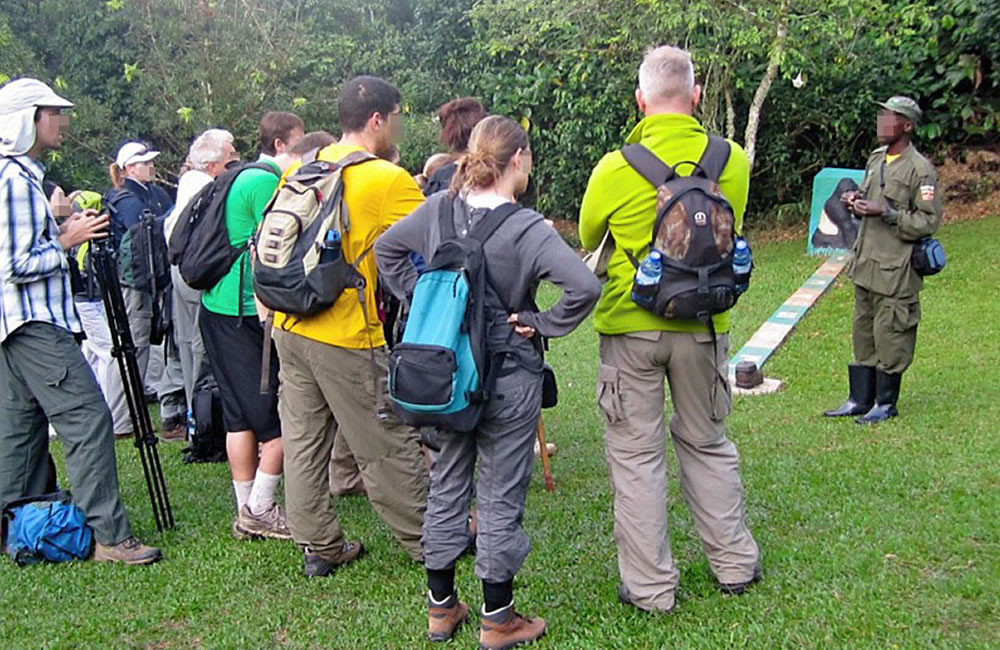
    • A single gorilla family can only be visited is visited by eight people in a day and restricted to an hour of interaction with the animals
    • Visitors / people are not allowed to keep close with these creatures so should atheist stay away 7 meters from the animals even when reached / provoked by these mammals.
    • Limit your eye contact with the gorillas and avoid flash lights when photographing etc.

    To elaborate on keeping some distance away from the mountain gorillas is to help maintain their growing numbers as, this helps in the reduction of the spread of diseases from humans to mammals ( especially the young that have less immunity systems). The 7metres distance away from the endangered creatures also helps them to keep in their natural state, eating, playing and teasing each other. It should be noted that at times it may be hard to keep this rule as the young mountain gorillas usually try to approach humans though tourists / visitors are always reminded to avoid getting in contact with these animals.

  • Gorilla Trekking Contributing to Survival of Mountain Gorillas

    Gorilla Trekking Contributing to Survival of Mountain Gorillas

    It takes a day or a few hours to travel to the Bwindi Impenetrable National park and the Virunga massif area, the region for mountain gorillas shared by Uganda, Rwanda and Democratic Republic of Congo. You know tracking mountain gorillas in Africa has never been easy in one way or the other.  Gorilla permits are scarce and costly backed up by steep demand all year in all .However, the effort of saving mountain gorillas in the wild jungle forests has been challenging from back then ever since when conservation started. Apart  from insecurity, being wild animals that roam in the jungle in search for eats, it’s very easy to land into traps of poachers’, diseases, ilega gorilla trade and encroachment of forest lands forcing gorillas to constantly migrate (Human conflict) that have been the major threats for the giants apes  ever since.

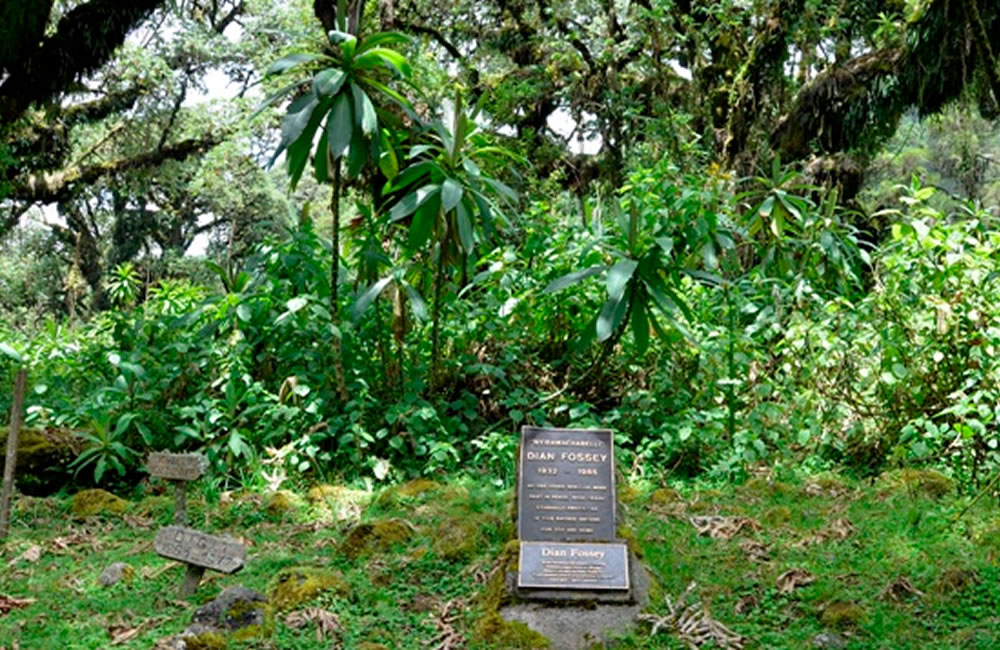
    Due to conservation a several threats have been addressed in order to save the mountain gorilla population in Africa. The mountain gorilla census data says over 880 mountain gorillas are found on earth in Bwindi Impenetrable National Park and and the Virunga Massif (comprised of Volcanoes National Park in Rwanda, Mgahinga Gorilla National Park in Uganda, and Parc National de Virunga in the Democratic Republic of Congo).Dainy Fossey is one of the famous conservationist who died at work saving forest creatures and her effort is remembered and celebrated in Rwanda gorilla tourism in volcanoes national park. Mountain gorilla tourism  is a major income generating project that needs much more a tension and the big thanks goes to all gorilla conservation organizations, governments, communities and tourists who respect the rules and regulations for all gorilla tracking parks.

    The Park Communities

    However, I think the park communities  both within and outside the park have done so much  to save the lives of mountain gorillas  and without them gorilla tourism would be at stake .Imagine a situation where one surrenders her ancestral home and accept to leave  in a new environment (Pygmy people of Bwindi forest).The people living around Volcanoes national park in Rwanda, Bwindi-Mghainga  in Uganda and Virunga national park also  they sacrificed their source of income for gorilla tourism  devised other sources of firewood, food, water and shelter, and medicine. By so doing this the human conflicts activities that could hinder mountain gorilla lives where reduced.

    Gorilla Rules and Regulations

    The dos and don’ts of gorilla tracking are the other ways mountain gorillas have been able to survive threats like diseases and stress. A limited number of eight tourists per a gorilla group per day, standing in a 5-7 meter distance, no  tracking gorillas if you have contagious diseases like flue and cough, no touching gorillas, no eating and drinking in front of gorillas   etc this protects them from many human diseases that affect their lives. Above all mountain gorilla parks have lauded the birth of various baby gorillas and celebrations of baby gorilla naming ceremonies which all a result of conservation and other factors.

  • Dian Fossey : The World Renowned Primatologist

    Dian Fossey : The World Renowned Primatologist

    People from different parts of world visit Rwanda for mountain gorilla trekking safari and Dian Fossey but they do not Know how real Dian Fosse was, here is a summary of her life. She was born in San Francisco, California and was a daughter of Kathryn Kitty, a fashion model. Unfortunately her parents divorced when she was only six years of age then the following year, her mother remarried the following year to a prominent business man Richard Price. The father tried to keep in full contact with the mother however the mother discouraged her and he subsequently lost the contact and the step father did never treated her as his own child. Interesting enough at the age of six years, she began horse riding and earning a letter from her school during the graduation in 1954.

    Dian Fossey was educated at Lowell High school following the guidance of the step father who enrolled her in business school at the College of Marin though he turned it down spending her summer on a ranch in Montana at the age of 19 and gaining momentum for the love for animals and eventually was enrolled for a pre-veterinary course in biology at the University of California which was contravention to her step father’s wishes. She spent her life working with animals and as a consequence her father failed to give her substantial amount of financial support throughout her adult life. However she supported herself by working as a clerk at white from department, doing other clerking and laboratory work and laboring as a machinist in a factory.

    She turned down the offer to join the Henry on an African tour due to lack of finances though in 1963, she borrowed $ 8,000 which took her life savings and went on a seven week visit to Africa where she arrived in Nairobi, Kenya‘s capital where she met actor William Holden the owner of Treetops Hotel who then introduced her to John Alexandra who became her guide for the following seven weeks through the pride of Africa (Kenya), Tanzania, Democratic republic of Conga and Rhodesia. The guide’s route with her included visits to is Tsavo national park which is Africa’s biggest park, Lake Manyara famous for flamingos and Ngororongoro crater which is well known for the abundant wildlife. Then she left to Congo and on her way, she visited Gombe stream research center to meet Goodall and her research methods first with the Chimps while being accompanied with her photographer Alan Root, who helped her to obtain her work permit for the Virunga Mountains and began her field study at Kabara in the republic of Congo. During her research, she identified three distinct groups in her study area though she could not get close to them

    The date was 24th, 1967 when she founded Karisoke Research Center, a remote rain forest camp which is nestled in Ruhengeri province in the saddle of two volcanoes and she was known by the locals as Nyimachabeli which roughly as the woman who lives alone on the mountain. She then tempted to prevent the export of two young gorillas from Rwanda to the Zoo in Germany and during the capture of the infants at the behest of the cologne Zoo and Rwandan park conservator.

  • Responsible Tourism: A Key to Saving Mountain Gorillas

    The rapid decrease in the number of mountain gorillas in the late 80s and 90s in the Virunga Conservation Area that stretches across the borders of Uganda, Rwanda and democratic republic of Congo raised the attention of Dian Fossey an American primatologist who dedicated her life to saving the primates in the area. She discovered that responsible tourism was the only way to save the rare mountain gorillas in Uganda, Rwanda and democratic republic of Congo. The Increased interest in their conservation, coupled with the advent of gorilla tourism in the 1980s and 90s, raised mountain gorilla populations steadily to 880 at present. Responsible tourism combines many things including; ecotourism, proper management of the National Park and gorilla tourism which help to conserve and preserve not only the mountain gorillas but also other wild life in national parks.

    Responsible tourism is concerned with the conserving, preserving, maintaining and protecting the wildlife within their habitats. This has mainly helped in increasing the number of wildlife species within the national parks. It has greatly promoted the conservation of mountain gorillas in the national parks of Bwindi Impenetrable Forest, Mgahinga in Uganda, volcanoes national park in Rwanda and Virunga National Park in democratic republic of Congo, this is through conservation programs all put in action by responsible tourism.

    It finances the bulk of wildlife and habitat conservation across the country as a whole but it has also turned the gorillas into a valuable commodity prized by local communities, these gentle gorillas provide much-needed funding for local infrastructure and a source of employment on both a local and national level. Gorilla tourism has become a valuable source of revenue for the governments as well as the local communities adjacent to these protected areas. The gorilla permit, a requirement for visitors taking gorilla safaris costs US$600 in Uganda and US$1500 in Rwanda which revenue is used to support government programs and local communities as well.

    However,the gorilla tourism sector is guided by a set of rules and regulations for example a maximum of 8 people are allowed to visit one gorilla family for the maximum of 1 hour, tourist who have illness such as influenza and cough are restricted from interacting with the gorillas. Sharing with gorilla by the tourists and coming in close contact is also discouraged because mountain gorillas share 98% of the human DNA and are susceptible to human diseases.

    Continuous monitoring and checking is ensured for the good health of mountain gorillas in their habitats, gorilla doctors have been trained and employed to treat and operate the injured mountain gorillas in Bwindi, Mgahinga, Volcanoes and Virunga national park all funded and supported by responsible gorilla tourism for example in the first few weeks of 2013, the Gorilla Doctors, a veterinary team providing the gorillas with medical care in Rwanda, Uganda and DRC, performed four medical interventions on gorillas trapped in snares, injured gorillas were operated by the gorilla doctors ensuring good health. These gorillas are injured but the traps and snares set by the hunters and poachers who target other primates but gorillas end up as the victims.

    More still, education and awareness has been promoted for all the participants in gorilla tourism. Responsible codes of conduct by tourists, involvement of local people and sharing of gorilla tourism benefits between the government and local people around the protected areas has promoted good relations creating a good environment for the mountain gorillas.

    Infrastructural development in local communities connecting to all protected areas has been supported by responsible tourism. This eases the movement of both tourists to the protected areas and local people as they transport their local products such as agricultural products that support livelihood of the local people and enable tourists to participate in wildlife tourism especially gorilla tourism in right time saving the rare mountain gorillas from misuse and irresponsible tourism practices.

    Development through conservation programs have been promoted, these have helped local people to improve their livelihoods while at the same time conserving the rare endangered mountain gorillas in Uganda, Rwanda and Democratic republic of Congo.

    Conclusively, responsible tourism is the only way in which mountain gorillas can be saved through conservation, helps governments to earn revenue through the selling of permits, supports local communities and provides tourists with the memorable experience in their travel life time.

  • Why the Sick Are Not Allowed to Visit Gorillas

    In the world today, there remains only about 880 mountain gorillas (Gorilla BeringeiBeringei) surviving in the wild. This population still stands at a risk of extinction due to the ongoing human activities like; deforestation and increasing human population, hunting,civil wars ( The war in DR Congo that has lasted for quite some time now and has ended up involving the mountain gorillas in this political unrest) , diseases, destruction of forest habitat and capture for the illegal pet trade.

    And because of this the humans are continuously encroaching on their (mountain gorillas) settlement area thus pushing the mountain gorillas out of the wild and into extinct. Several rules have been set to protect the mountain gorillas in the wild and one of the rules is that tourists should not take a gorilla trek when sick.

    The International Gorilla Conservation Programme that was laid has played a big role in the protection of this endangered species of wildlife through the establishment of Regional Cooperation on Natural resource maintenance and management. It has seen its work through; strengthening the protection of mountain gorillas and their habitat through regional collaboration by the 3 ( three) countries and structured mechanisms for trans-boundary conservation; establishing a strong information base to allow decision makers to understand the dynamic between the human population and the natural habitat/wildlife; and working with local communities to develop livelihood strategies that are complementary to, and even contribute to conservation objectives.

    Mountain gorillas are as strong and fragile as human beings as they share quite a lot of similar characters and due to this; they are prone to many human contagious diseases. This can arise as the humans push / extend closer to the mountain gorilla’ homesteads, bringing with them the risk of spreading human diseases to gorillas such as the flu, pneumonia, and even ebola. People tend to move to the regions of mountain gorillas because they have very fertile lands and rich biodiversity which yet impacts on the well being of these estranged and endangered species.

    In the current research / study by doctors, researchers and scientists has indicated that some mountain gorillas have died as a result of contracting diseases from human beings mainly the respiratory diseases (flu, mild colds and pneumonia). These respiratory diseases come second after trauma that normally cause death among the young gorillas.

    In order to protect the livelihoods of these mountain gorillas, the IGCP together with the different tourism authorities and national park authorities in the three countries of Uganda, Rwanda and Democratic Republic of Congo have established some rules for trackers once planning to visit the mountain gorillas.And among these rules, there includes the fact that for any one feeling sick especially those suffering from flu, cold, diarrhea, fever etc should avoid going near the National parks harboring these creatures. The rule requests all those with any infectious sickness not to go for mountain gorilla tracking as it can be dangerous to both the trekker and the animals.